5k+ Satisfied Clients
Trusted by thousands of happy clients
24x7 OUR SERVICES
We are here for you, anytime
5k+ Satisfied Clients
Trusted by thousands of happy clients
24x7 OUR SERVICES
We are here for you, anytime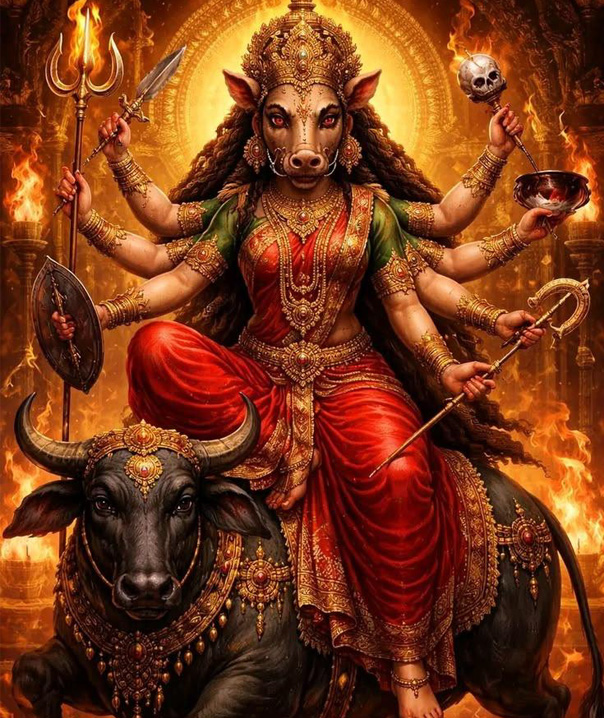
Goddess Varahi is one of the Saptamatrikas (seven sacred mother goddesses in Hinduism). She is the fierce, boar-faced Shakti (feminine energy) of Lord Varaha, the boar avatar of Lord Vishnu.
Commander-in-Chief: In the Sri Vidya tradition, she is regarded as the powerful commander-in-chief of Goddess Lalita Tripurasundari's army.Grounded Strength: Her boar face represents the ability to dig deep into the earth, symbolizing the transformation of fears, suppressed emotions, and worldly anxieties into spiritual strength and protection.Abundance: In some traditions, she is revered as a manifestation of Lakshmi who provides material prosperity, stability, and healing.
Commander-in-Chief: In the Sri Vidya tradition, she is regarded as the powerful commander-in-chief of Goddess Lalita Tripurasundari's army.Grounded Strength: Her boar face represents the ability to dig deep into the earth, symbolizing the transformation of fears, suppressed emotions, and worldly anxieties into spiritual strength and protection.Abundance: In some traditions, she is revered as a manifestation of Lakshmi who provides material prosperity, stability, and healing.
Vārāhi is also called Pañcami, indicating that She is the fifth form of Śakti, the consort of Sadāśiva, responsible for Regeneration of the Universe. The five elements of air, ether, water, fire and earth are also referred to as Pañcami and She lords over them.
Her role as Pañcami, the Lord of all the Pañcabhūta-s or five basic elements of air, ether, water, fire and earth. The knowledge realms represented are:-
 1.Tathatājñāna :- Non-conceptualizing awareness of emptiness or śūnyata. Also called as dharmadhātu
awareness. This basic ground awareness unifies the other four. 2.Ādarśajñāna :- Mirror-like awareness devoid of all dualistic thoughts and ever unified, like a mirror with its
reflections. 3.Samatājñāna :- Awareness of sameness with all phenomena. 4.Pratyavekṣaṇajñāna :- Investigative awareness of all general and specific qualities of phenomena.5.Kṛtyānuṣṭhānajñāna :- Awareness of accomplishing activities for the welfare of all creation. Manifestation in
all directions.
Vārāhi riding a
1.Tathatājñāna :- Non-conceptualizing awareness of emptiness or śūnyata. Also called as dharmadhātu
awareness. This basic ground awareness unifies the other four. 2.Ādarśajñāna :- Mirror-like awareness devoid of all dualistic thoughts and ever unified, like a mirror with its
reflections. 3.Samatājñāna :- Awareness of sameness with all phenomena. 4.Pratyavekṣaṇajñāna :- Investigative awareness of all general and specific qualities of phenomena.5.Kṛtyānuṣṭhānajñāna :- Awareness of accomplishing activities for the welfare of all creation. Manifestation in
all directions.
Vārāhi riding a Vārāhi riding a bull and carrying a stick, is also called Yāmini, the śakti or power of Yama, who rules the Southern direction and is the enforcer of karmas on departed souls. Vārāhi also has a form called Kirāta Vārāhi, which is a huntress form that She employs in destroying all animal tendencies in us and our enemies.
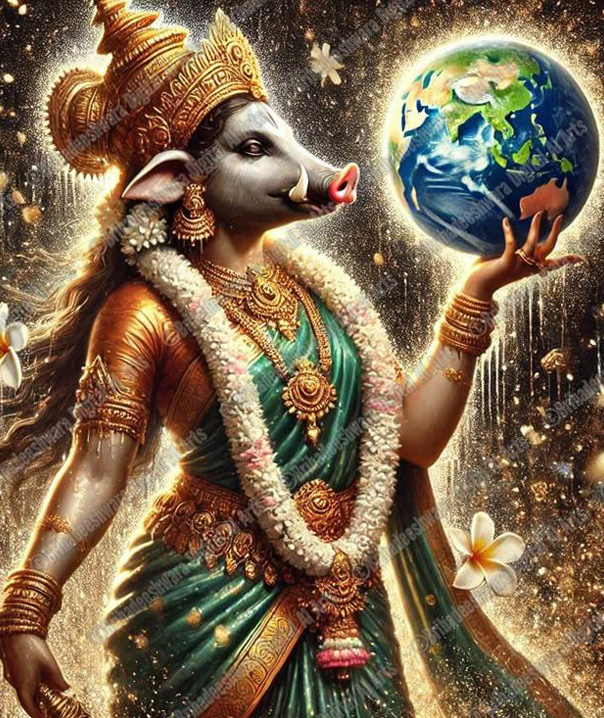
Vārāhi as the śakti or power of Lord Vārāha, supports the entire world and the universe on Her tusks. She lifts the Creation from the netherworlds and protects everyone.
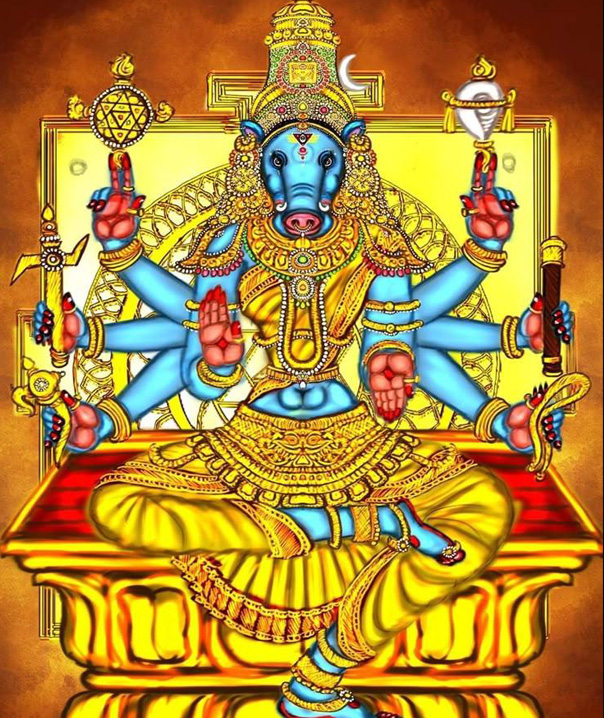
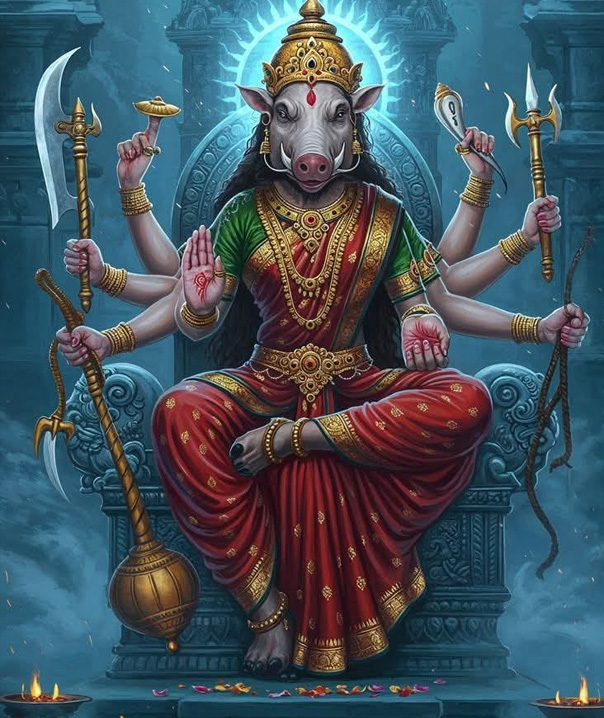
Boar Face on a Human Body: Varahi is often depicted with the face of a sow (boar) symbolizing her connection to the cosmic boar, Lord Varaha. Her face, gently fierce, signifies her strength and earthbased nurturing energy.
Black Complexion: Goddess Varahi is usually shown with a dark complexion, resembling a storm cloud, representing the cosmic energy and the infinite universe she governs.
Holding the Earth: She is described as holding the earth on her tusks, similar to Varaha. This symbolizes her role in sustaining and protecting the world, both physically and spiritually. There is a belief that Varahi is identified with the Yoganidra of Vishnu, who holds the earth in her womb (Bhugarbha Paranmesvari Jagaddhatri).
Varahi Devi may be two, four, six or eight armed and can be depicted in sitting, standing and
dancing. In the “Vishnudharmottara Purana,” “Goddess Varahi” has been described with a six arms, holding a
danda (staff of punishment), khetaka (shield), khadga (sword) and pasha (noose) while performing
“Abhaya” and “Varada Mudra” (blessing gesture). In Rupamandana, Varahi is depicted with four arms, carrying a ghanta (bell), a chamara (a Yak’s tail),
a chakra (discus) and a gada (mace). In Purva-Karanagama mentions, “Varahi” holds the Sharanga (the bow of Vishnu), the hala (plough)
and the musula (pestle).
• The Agni Purana portrays
In the “Devi Purana,” “Varahi” is described as carrying a sword, iron club, pasha (noose), and khetka
(shield).
Blessing Gestures: Varahi Devi is frequently shown performing the Abhaya Mudra (gesture of
protection) and Varada Mudra (gesture of blessing), symbolizing her dual nature of offering both
defense and grace to her devotees.
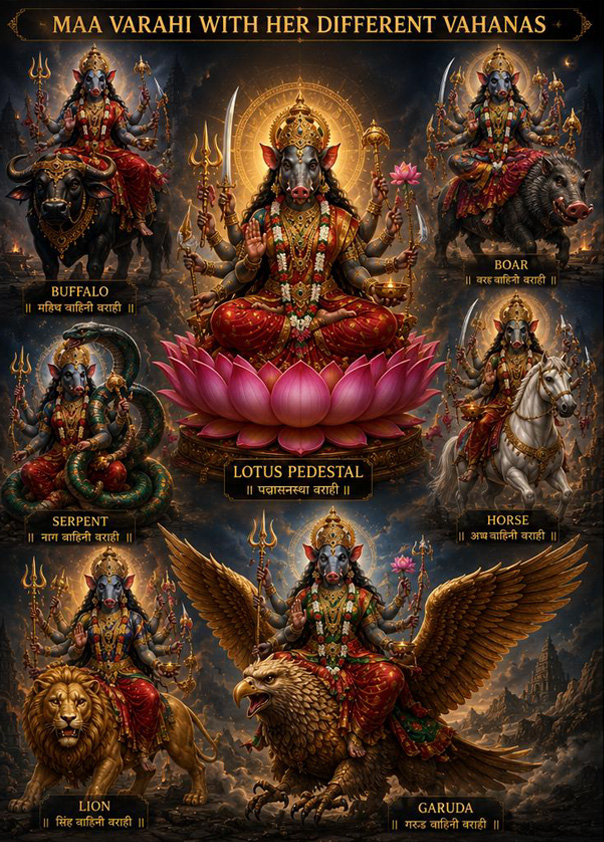
Devi Varahi, like many other deities, is often depicted riding or seated on a sacred mount or vahana, each symbolizing her immense power and divine attributes. The choice of vahana signifies different aspects of her strength, grace, and her ability to transcend various realms of existence. Here are the primary vahanas associated with Goddess Varahi:
Buffalo (Mahisha): Varahi is seen seated on a buffalo, representing strength,
resilience, and power. The buffalo symbolizes the earthly domain and the primal
forces of nature that the Goddess controls. Lotus Pedestal (Pitha): Symbol of spiritual purity, In some traditions, Varahi is
shown standing or seated on a lotus pedestal (pitha), which signifies the Goddess’s
connection to the divine and her role as a spiritual guide. Boar (Varaha): The boar mount symbolizes the cosmic forces of creation and
protection, especially since Varahi is the feminine counterpart to the boar avatar of
Vishnu (Varaha). It highlights her ability to support and protect the earth. Serpent (Shesha): Shesha, the cosmic serpent, represents the vastness of the
universe and infinite power. When Varahi rides Shesha, it symbolizes her dominion
over the cosmic balance and her role in the preservation of creation. Horse (Jambini): The horse mount represents speed, freedom, and the Goddess’s
ability to overcome obstacles swiftly. Jambini, the name of the horse, also ties her
to the force of divine energy in motion. Lion: Varahi on a lion represents courage, fearlessness, and royalty. The lion is
known as the king of beasts, signifying Varahi’s supreme power in the divine realm. Garuda (Eagle-Man): Garuda, the eagle-man, is Vishnu's vehicle and symbolizes
divine intelligence and the ability to soar beyond material limitations. When Varahi
is depicted riding Garuda, it indicates her transcendence over space and time, and
her role as a protector of the cosmos. 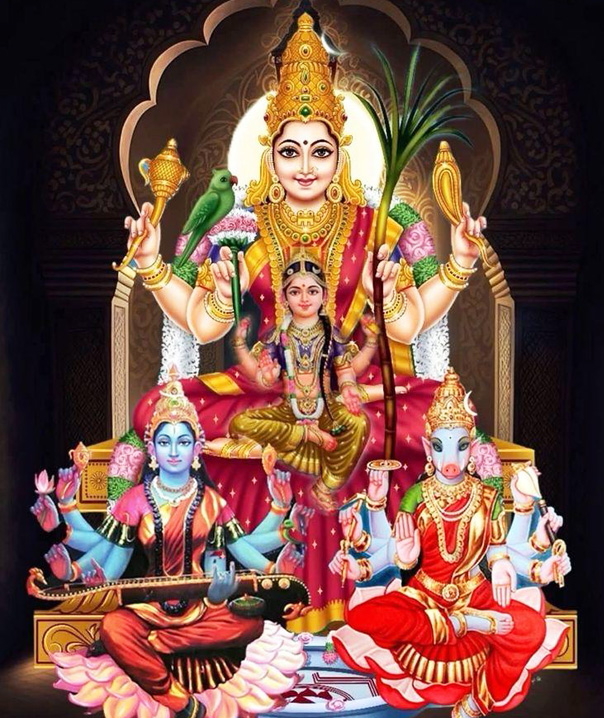 1. Maha Varahi / Adi Varahi: The supreme, primordial manifestation
representing the highest wisdom and grant of the Ashta Aishwarya
(8 forms of wealth). 2. Svapna Varahi: She is a form of Mahāvārāhi, who aids us in
revealing the future course of actions to perform, as well as events
to come. She fulfills all our dreams and wishes and removes all
illusion and directs us to our true purpose.The form that grants
prophetic dreams, divine revelations, and profound intuition. 3. Canda Varahi: A fierce, wrathful form considered a great protector
that helps devotees destroy negativity and adversaries. 4. Mahi Varahi (Bhairavi): A commanding, martial form associated
with immense power, often compared to Goddess Kali, known for vanquishing powerful demons. 5. Krcca Varahi: (Bhairavi): A protective form frequently invoked during times of severe crisis or danger; she is often depicted holding a trident and
riding a tiger. 6. Matsya Varahi: (Bhairavi): A unique manifestation linked with the energy of the oceans, often representing preservation and aquatic creation 7. Laghu Vārāhi: (Bhairavi): She is the power of Unmatta Bhairava and takes us to spiritual liberation and self-realization. She will reveal our true
spiritual nature and destroy all our inner fears, greed, ego etc and
reveals our true identity 8. Unmatta Varahi: (Bhairavi): A highly aggressive and wrathful form used to break deep-seated illusions and ego
1. Maha Varahi / Adi Varahi: The supreme, primordial manifestation
representing the highest wisdom and grant of the Ashta Aishwarya
(8 forms of wealth). 2. Svapna Varahi: She is a form of Mahāvārāhi, who aids us in
revealing the future course of actions to perform, as well as events
to come. She fulfills all our dreams and wishes and removes all
illusion and directs us to our true purpose.The form that grants
prophetic dreams, divine revelations, and profound intuition. 3. Canda Varahi: A fierce, wrathful form considered a great protector
that helps devotees destroy negativity and adversaries. 4. Mahi Varahi (Bhairavi): A commanding, martial form associated
with immense power, often compared to Goddess Kali, known for vanquishing powerful demons. 5. Krcca Varahi: (Bhairavi): A protective form frequently invoked during times of severe crisis or danger; she is often depicted holding a trident and
riding a tiger. 6. Matsya Varahi: (Bhairavi): A unique manifestation linked with the energy of the oceans, often representing preservation and aquatic creation 7. Laghu Vārāhi: (Bhairavi): She is the power of Unmatta Bhairava and takes us to spiritual liberation and self-realization. She will reveal our true
spiritual nature and destroy all our inner fears, greed, ego etc and
reveals our true identity 8. Unmatta Varahi: (Bhairavi): A highly aggressive and wrathful form used to break deep-seated illusions and ego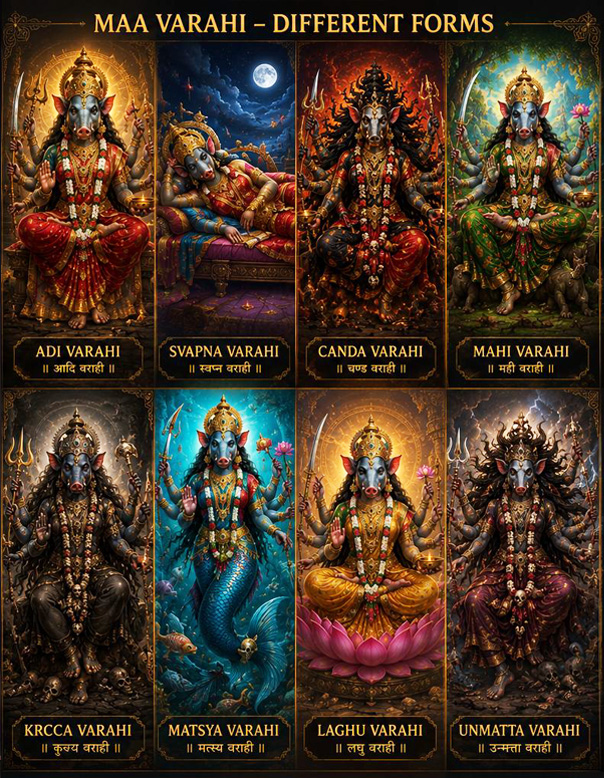
The 12 Names of Varahi (Dvadasha Varahi)In the Sri Vidya tradition and Brahmanda Purana, celestial beings praised the Goddess with twelve distinct names:
1. Panchami: The fifth aspect; related to her position as the head of the Matrikas. 2. Dandanatha: The commander of the army of Goddess Lalita, dealing out justice. 3. Sanketa: A form representing secret wisdom and encoded energies. 4. Samayeshwari: The ruler of time and cosmic rhythms. 5. Samayasanketa: The embodiment of cosmic rules and the realization of time 6. Varahi: The primordial power possessing the face of a boar. 7. Potrini: The nourisher who sustains the earth and all beings.
8. Shivaa: The auspicious and supreme motherly form.
9. Vaartali: The form that sustains commerce, agriculture, and removes the obstacles to prosperity.
10. Mahasena: The general leading the cosmic forces.
11. Ajnachakreshwari: The sovereign of the Ajna Chakra, granting deep meditation and spiritual awakening.
12. Arigni: The destroyer of all enemies, whether external or internal (such as ego and anger).
Ma Varahi's Creation: The scriptures describe Varahi as emerging from Lord Varaha (the cosmic boar incarnation of
Vishnu). Bearing a boar face and armed with a sword and chakra, Varahi is considered the fifth
of the Matrikas a guardian deity for earthly protection and spiritual strength. The Shumbha-Nishumbha Demon Slaying:
According to the “Shumbha-Nishumbha” story of the Devi Mahatmya from the Markandeya
Purana religious texts, the “Matrikas goddesses” appear as “Shaktis (feminine powers)” from
the bodies of the gods. When the demon “Shumbha” challenges Durga to combat, She absorbs
the Matrikas into herself. It has been described in the scriptures that Matrikas dance on the
demons’ blood after the battle. Ma Durga and the Slaying of Raktabija: According to “Devi Mahatmya” (a Hindu philosophical text describing the Goddess, known as
Mahadevi or Adishakti) that deals with the killing of the demon “Raktabija”, the warrior-goddess
Durga creates the Matrikas from herself and with their help slaughters the demon army. In the
“Vamana Purana”, the Matrikas arise from different parts of the Divine Mother Chandika; Varahi
arises from Chandika’s back.
The Earth and Varahi's Role:In the “Devi Bhagavata Purana,” the Earth is considered the receptacle of all things moving and
non-moving. After killing the demon “Hiranyaksha”, Varaha rescues Prithvi and sets her afloat on
the waters. Assuming the splendid form of the cosmic boar, He copulates with her and
impregnates her. The Earth then gave birth to the planet Mars (Mangal). Varaha worships her as
Devi Incarnate. The Earth Mother replies that at his command she will assume the form of
“Varahi” and easily support the whole world of moving and non-moving things on her back.
Among the Dasha Mahāvidyas, She is equated with Bagalamukhi, the controller of the tongue and the silencer of all enemies, internal and external.
""Om Shyamalaayai Vidmahae Hala Hasthaya Dhimahi, Thanno Vaaraahi Prachodhayaath"
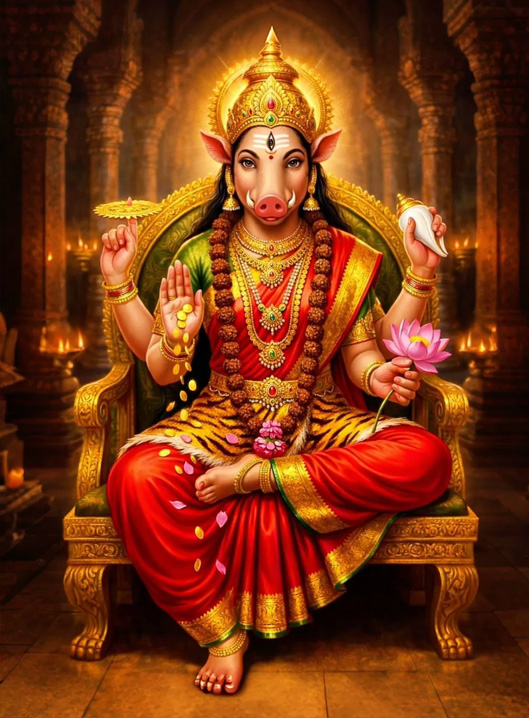
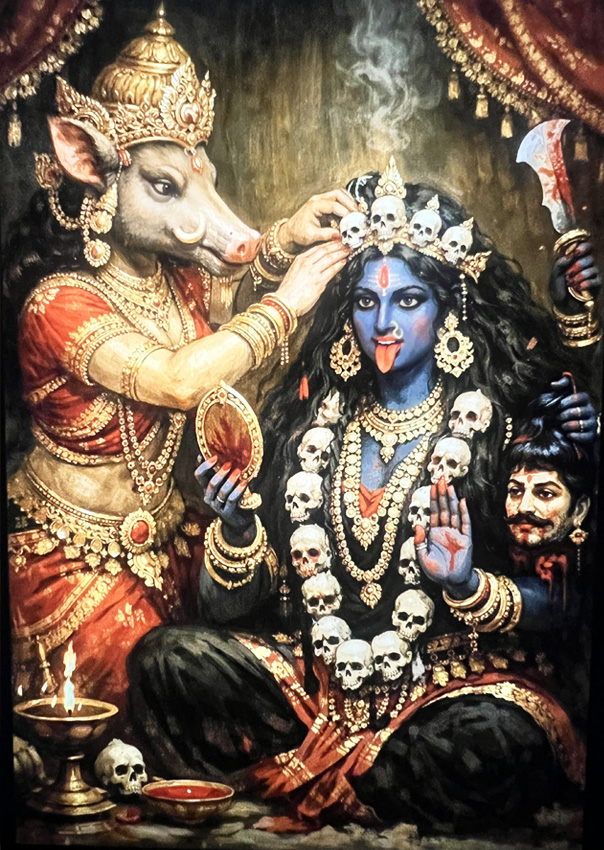
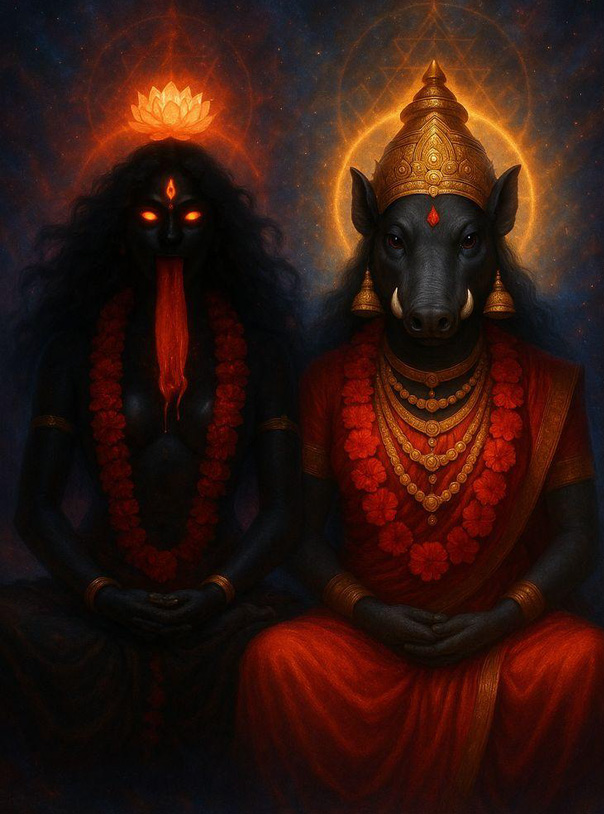
The Muladhara Chakra, symbolized by a red lotus with four petals, is the seat of primal energy, survival instincts, and hidden fears. Here, Maa Varahi reigns as the digging force of Shakti, her boar snout rooting through the mud of ignorance to expose buried karmas.
Her boar form represents relentless strength, tearing through illusions like earth. Her weapons, the plough (hala) and skull cup (kapala) signify tilling the mind field (chitta bhumi) and
drinking the elixir of fearlessness. She is linked to Maa Lakshmi, showing that material stability (Muladhara) must be mastered before
spiritual ascent. She is invoked in Bhuta Shuddhi (elemental purification) to cleanse the gross body before Kundalini rises. At the crown, the Sahasrara Chakra blooms as a thousand petalled lotus, the gateway to nirvikalpa samadhi (formless ecstasy). Here, Maa Kali stands as Mahakali, the Dark Mother who swallows time itself.
Tantric Symbolism:
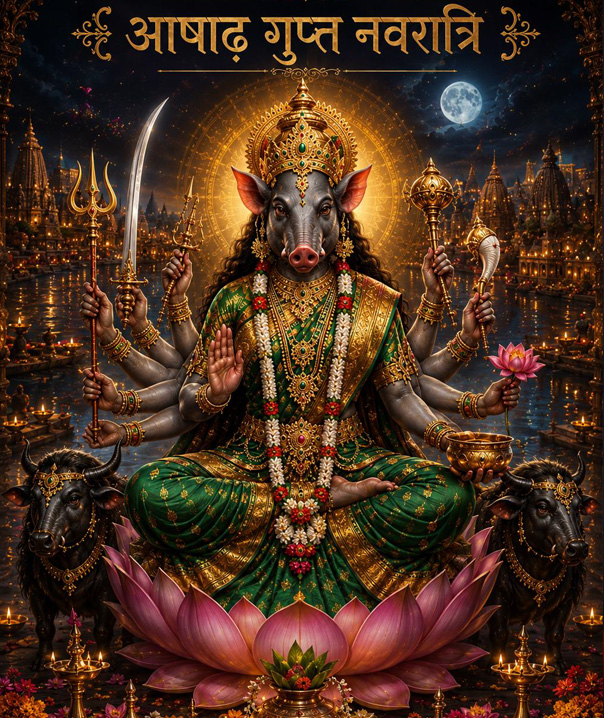
Ashadh Gupt Navratri holds tremendous spiritual power and mystical energy, and is dedicated to the worship of nine forms of Shakti, especially Goddess Varahi, a fierce and protective deity representing the boar-headed incarnation of Goddess Durga.
It is a sacred nine-day festival celebrated in the month of Ashadha (June–July) during the Shukla Paksha (waning phase of the moon). Unlike Sharadiya and Chaitra Navratri, which are widely observed, Gupt Navratri remains lesser-known and is celebrated secretly or in solitude, primarily by Tantric practitioners, spiritual seekers, and devotees of the Divine Mother.
Gupt Navratri focuses on invoking the hidden or secretive forms of Goddess Durga, including the Dasa Mahavidyas and Saptamatrikas, where Varahi Devi plays a central role. As a guardian deity, Ma Varahi is often revered for protection from enemies, victory in legal disputes, healing from diseases, and spiritual uplift.
Disputes related to landed property, or building addressed Material success and legal victory Miraculous blessings and divine grace Protection from enemies, black magic, and hidden dangers Removal of negative karma and ancestral doshas Removal of negative karma and ancestral doshas Spiritual advancement and inner awakening Improved mental health and psychic strength 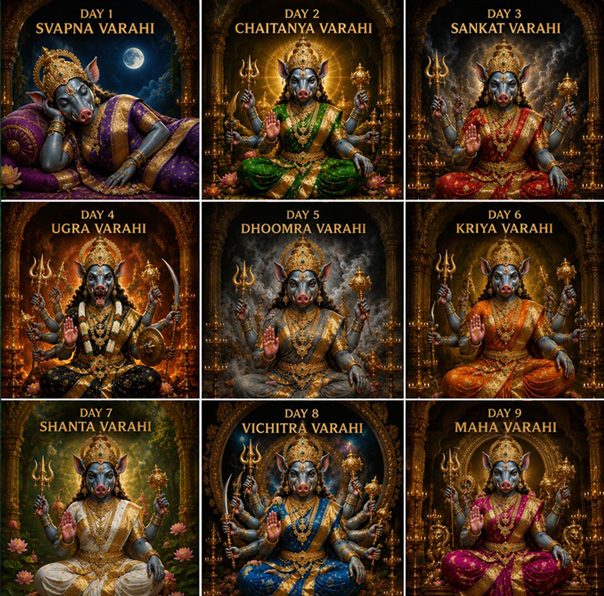
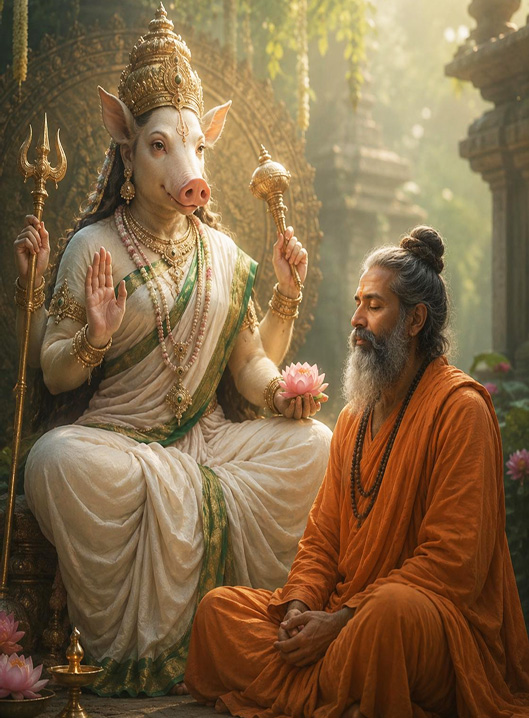
BALAJI GURUJI (AVADHUTA PEETHAKAM) HAS BEEN DOING THIS SEVA FROM HIS GURU PARAMPARA WITH GURU MANDALA AASHIRWAAD.
IF YOUR KARMA IS BALANCED WITH GOOD DEEDS YOU WILL SOLVE ALL YOUR PROBLEMS!
YOUR SINCERE PRAYERS TO GOD HAVE BROUGHT YOU TO THIS DOORWAY.
IN ALL THE 14 LOKAS ONLY GURU CAN HELP YOU, GUIDE YOU & PROTECT YOU!
MAY THE LIGHT GUIDE YOU!
BY APPOINTMENT ONLY!
Remove Black Magic & Vashikaran Effects Astrology & Palmistry Cure curses from venereal diseases Cure Infertility issues Relationship Problems Takes care of Marital Problems & Marriage Financial Problems Health Problems Abroad Travelling Horoscope Matching Removing Evil Eye Removing Kaala Jaadu Removing Ancestral Problems Children future reading by Kundali Job Problems Boost Education, etc. Get Instant Solution To Your Problems


Balaji Guruji is dedicated to providing accurate predictions and effective solutions through vedic wisdom.